Information complémentaire
| Pays | |
|---|---|
| Région | |
| Marque | |
| Langue | Anglais |

37.99$
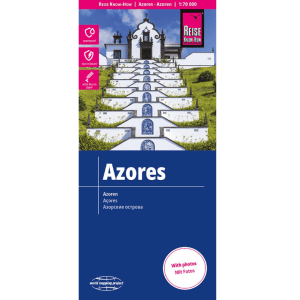
Azores – Bradt Guides (Açores)
This updated Bradt Azores Guidebook, now in its eighth edition, remains the only comprehensive guide to this nine-island archipelago – a mountainous, nature-lover’s wilderness perched in the mid-Atlantic at the western extremity of Europe.
One of the world’s best whalewatching destinations, a geological curiosity and – more recently – a mid-Atlantic adventure playground, the Azores have become ever more accessible thanks to low-cost European flights. The nine islands making up the Azorean archipelago share volcanic origins, albeit from different eras, so each rugged landscape boasts a unique feel.
The approach to tourism also differs from island to island: while São Miguel welcomes a rising number of cruise ships and international flights, and Faial is a busy hub for trans-ocean yachts, tiny Corvo and gentle Santa Maria remain almost untouched.
The Gulf Stream guarantees a mild climate and plenty of greenery: a pleasant environment for this easily accessible, safe, welcoming and authentic mid-haul destination.
With each island treated to its own chapter, Bradt’s Azores provides all the details a visitor needs for a rewarding, enjoyable visit to an archipelago where cows outnumber people. Author and expert botanist David Sayers shares his deep knowledge about flora, fauna and geology that are integral to getting to know the islands.
This updated Bradt Azores Guidebook – thoroughly checked and brought up to date by prolific guidebook author Tim Burford – strengthens coverage of the land- and sea-based activities that have become a significant part of the Azores’ attractions this century while providing the most recent practical information such as where to stay and eat in every price band.
Five centuries of human history are well documented in a host of museums spread across the islands, which explain the fluctuating fortunes and strategic importance of the archipelago through the centuries.
Attractive architecture, carefully preserved festivals, four islands with UNESCO Biosphere Reserve status and thermal pools complete what is a very agreeable picture.
Little wonder then that the Azores attracts geologists, birdwatchers, whalewatchers, horseriders, walkers, mountaineers bent on climbing Portugal’s highest peak (on Pico island), divers, surfers, sailors, mountain-bikers and canyoners – indeed anyone who loves nature or the great outdoors in all its forms.
Foreword by Ben Fogle
Introduction
PART ONE: GENERAL INFORMATION
Chapter 1 Background Information
Chapter 2 Practical Information
PART TWO: EASTERN GROUP
Chapter 3 São Miguel
Chapter 4 Santa Maria
PART THREE: CENTRAL GROUP
Chapter 5 Terceira
Chapter 6 Graciosa
Chapter 7 São Jorge
Chapter 8 Faial
Chapter 9 Pico
PART FOUR: WESTERN GROUP
Chapter 10 Flores
Chapter 11 Corvo
Appendix 1 Language
Appendix 2 Flora
Appendix 3 Fish on the menu
Appendix 4 Further information
Index
Index of advertisers
Details:
Ici pour les cartes des Açores!
| Pays | |
|---|---|
| Région | |
| Marque | |
| Langue | Anglais |